If you have spent any time looking at Cape Town villa listings, you will know that the Atlantic Seaboard does not really sell itself by suburb. It sells itself by postcode. A villa on Theresa Avenue does not advertise that it is in Bakoven; a Llandudno listing rarely mentions Hout Bay, even when the two are technically minutes apart. The postcodes have become shorthand for a feeling — a particular kind of light, a particular sort of street, a particular pace of evening.
This is a short tour through the Atlantic Seaboard postcodes that quietly do most of the letting work in this corner of the city, and what each one tends to mean once you arrive at the gate.
Llandudno and Bakoven: granite and quiet
Llandudno is the postcode that travellers fall for slowly. There are no restaurants, no shops, and no pavements to speak of — just a horseshoe of granite boulders, a single beach, and a hillside of houses that look as though they were placed rather than built. Villas here tend to be larger, more architectural, and more private than their Camps Bay neighbours. The mornings are slow and the evenings are slower; if you want to walk to a wine list, this is not your postcode.
Bakoven sits just up the coast, hidden behind a rocky outcrop and a row of pines. It feels like a fishing village that someone politely renovated. The stays are smaller, often clung to the rocks, and the soundtrack is permanent surf.
Camps Bay and Bantry Bay: the social middle
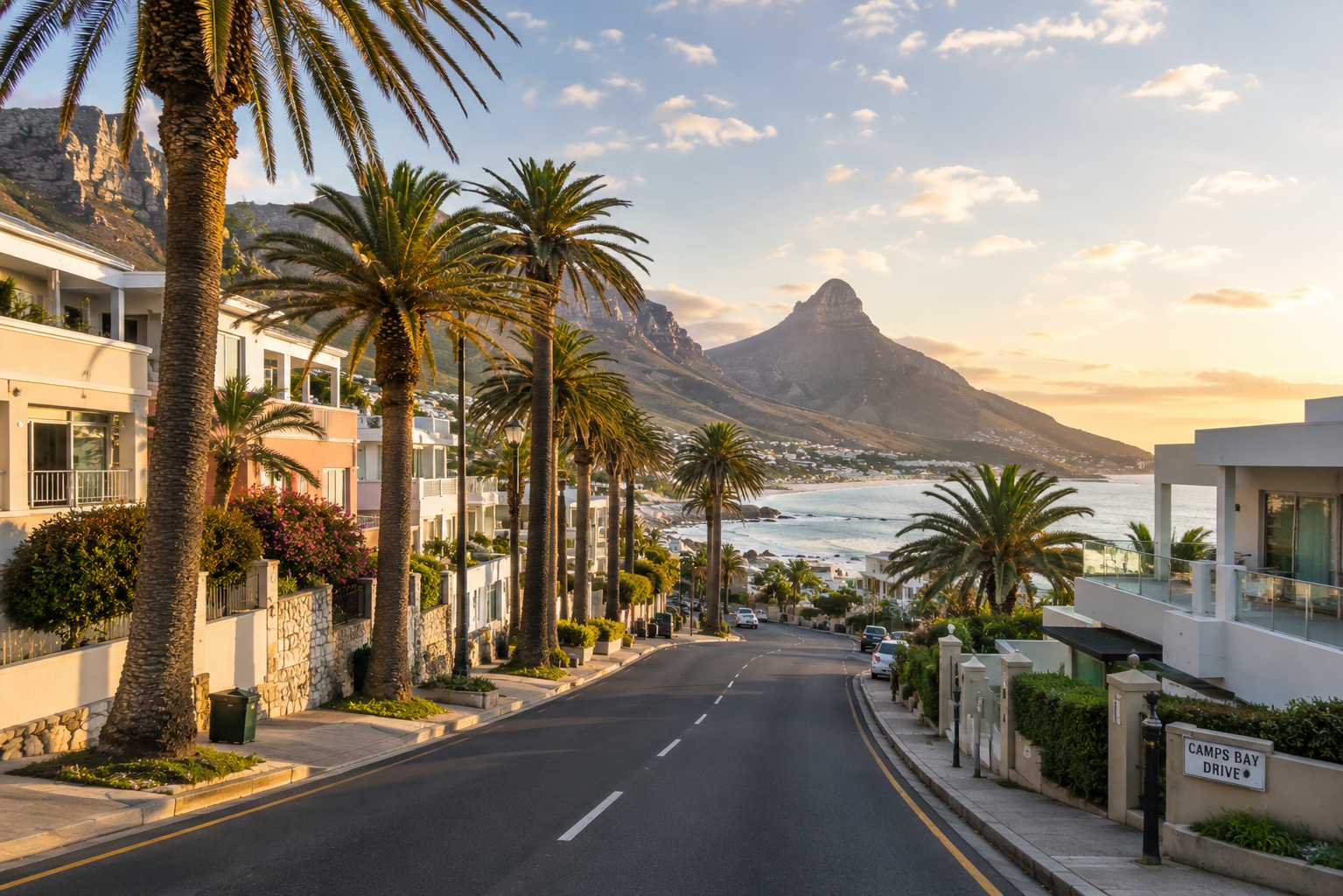
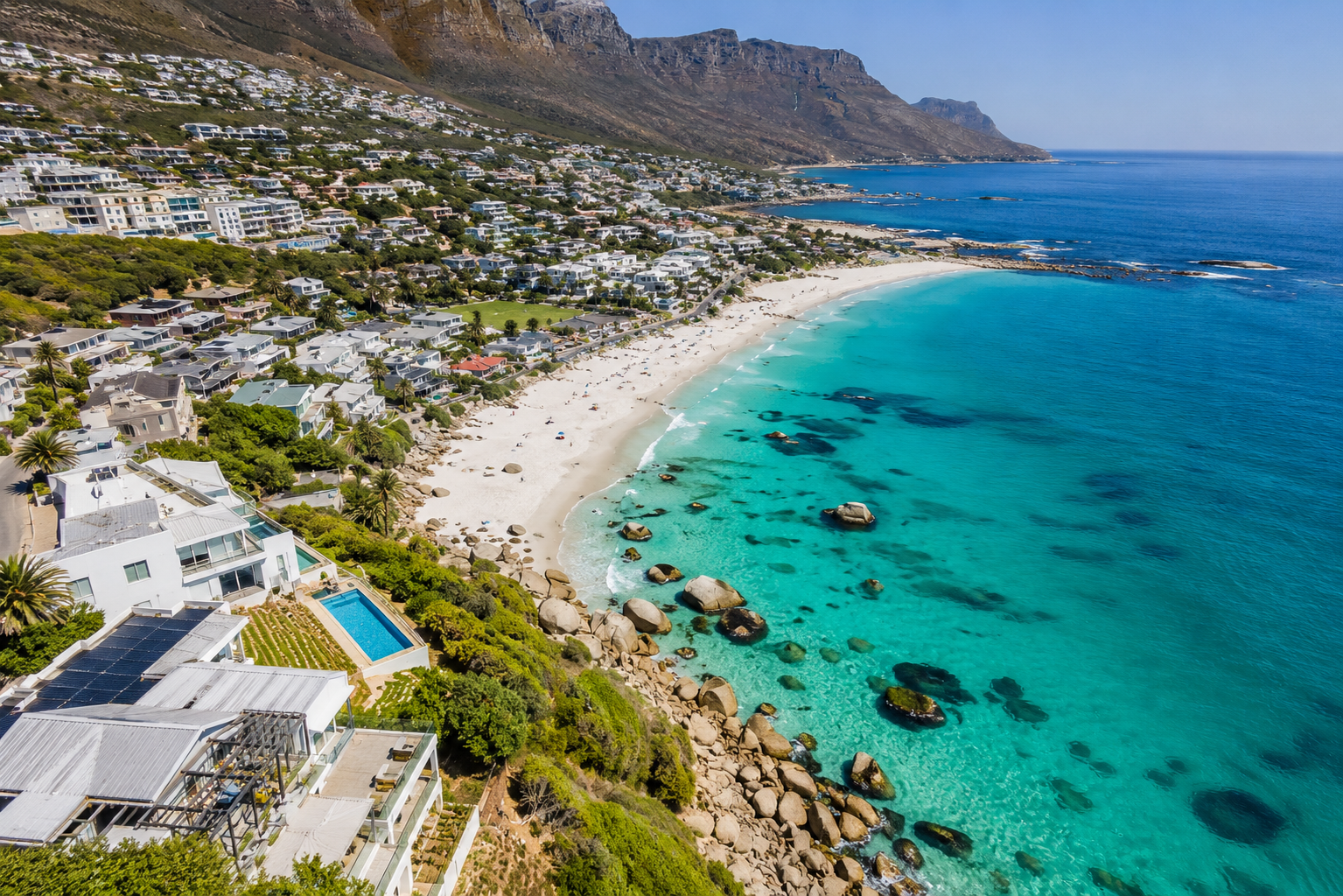
Camps Bay is the postcode most overseas travellers picture when they picture Cape Town — a long palm-lined strip, a beach with a working bar scene, and a hillside terraced with villas that all want a sea view. The stays here are noisier, more visible, and considerably more convenient. Most are within walking distance of a restaurant, a yoga studio, and at least one Pilates reformer.
Bantry Bay is the quieter sibling above it. The road narrows, the cliffs steepen, and the houses begin to lean out over the Atlantic on a series of cantilevered terraces. Villas here are typically older money, often family-owned for decades, and the lantern-lit terraces at sunset are one of the city's small private rituals.
Clifton and Fresnaye: the four bungalows postcode
Clifton is technically four beaches — First, Second, Third and Fourth — and most of its letting stock sits on the slopes above them. The further south you go, the more sheltered the beach and the more family-oriented the street. Fresnaye, the postcode immediately above Clifton, is where many of the larger Atlantic Seaboard villas sit: deep gardens, mature trees, and a school-run rhythm that surprises first-time visitors.
Mouille Point and Green Point: the city-edge postcodes
Finally, the Atlantic Seaboard quietly turns urban. Mouille Point is a flat, joggable promenade with a working lighthouse and a row of contemporary apartments; Green Point folds it into the stadium precinct and the V&A. These are the postcodes for travellers who want the sea on one side, a city on the other, and a coffee they can walk to barefoot.
Each of these postcodes earns its reputation in a slightly different way. The trick, as with most of the Cape, is to choose the one that matches the holiday you are actually planning — not the one that photographs best.