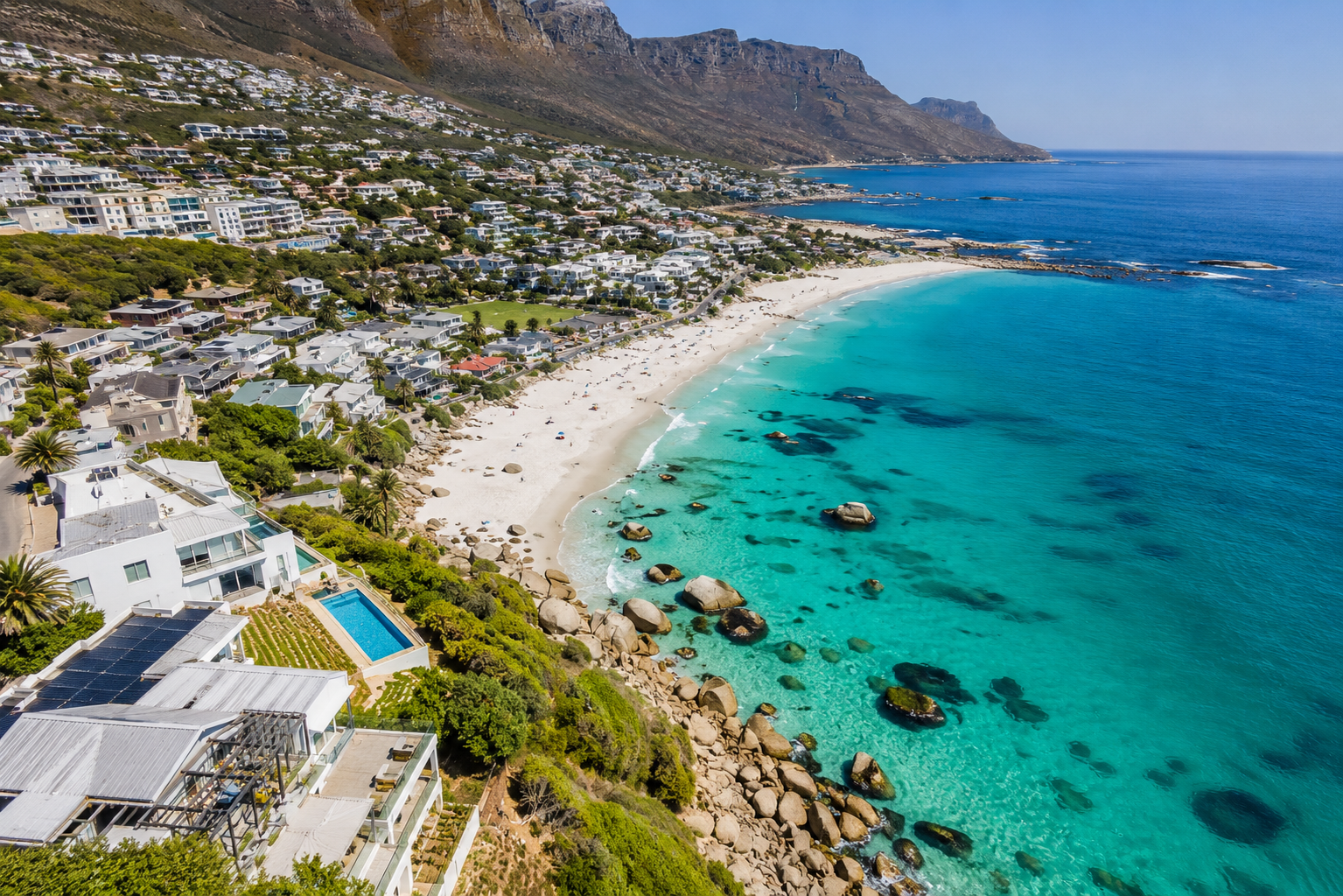
You can travel from Llandudno to Plettenberg Bay and look at fifty different Cape coastal villas, designed across forty years by perhaps a hundred different architects, and still see the same three obsessions repeating themselves. Light. Stone. Sea. Almost every house worth photographing in this part of the country sits, in some form, at the intersection of those three materials.
That is not an accident, and it is worth pulling apart slowly.
Light is the first material
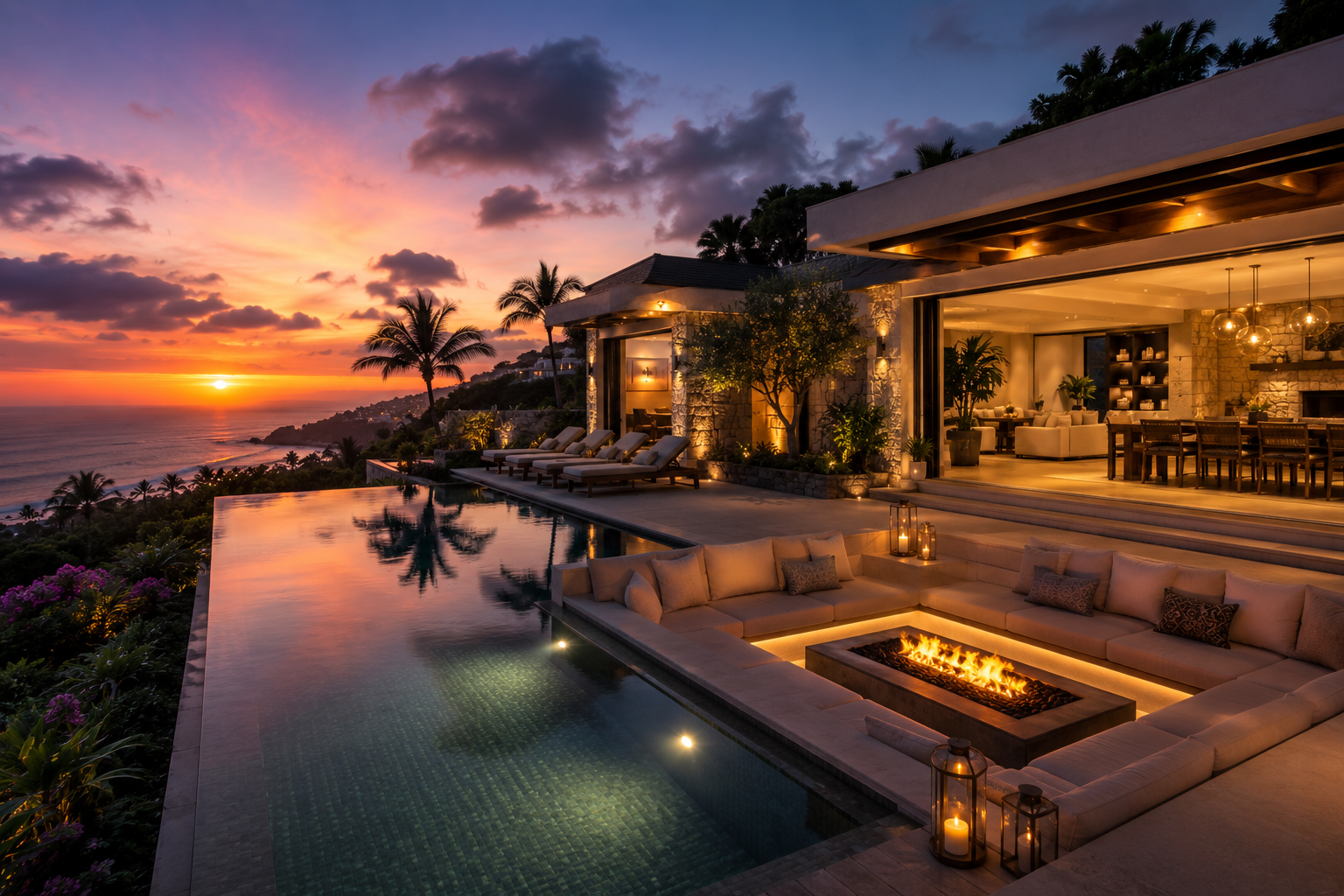
The defining quality of Cape coastal light is its angle. The Atlantic-side villas face roughly west, into long sunsets that throw orange across white walls for an hour at a time. The False Bay houses face east, into morning light that arrives off the sea rather than off the city. Both conditions are uncommon — most coastal architecture, globally, is built parallel to the sun's east-west axis, and the result is light that arrives sideways through the day rather than head-on at the ends of it.
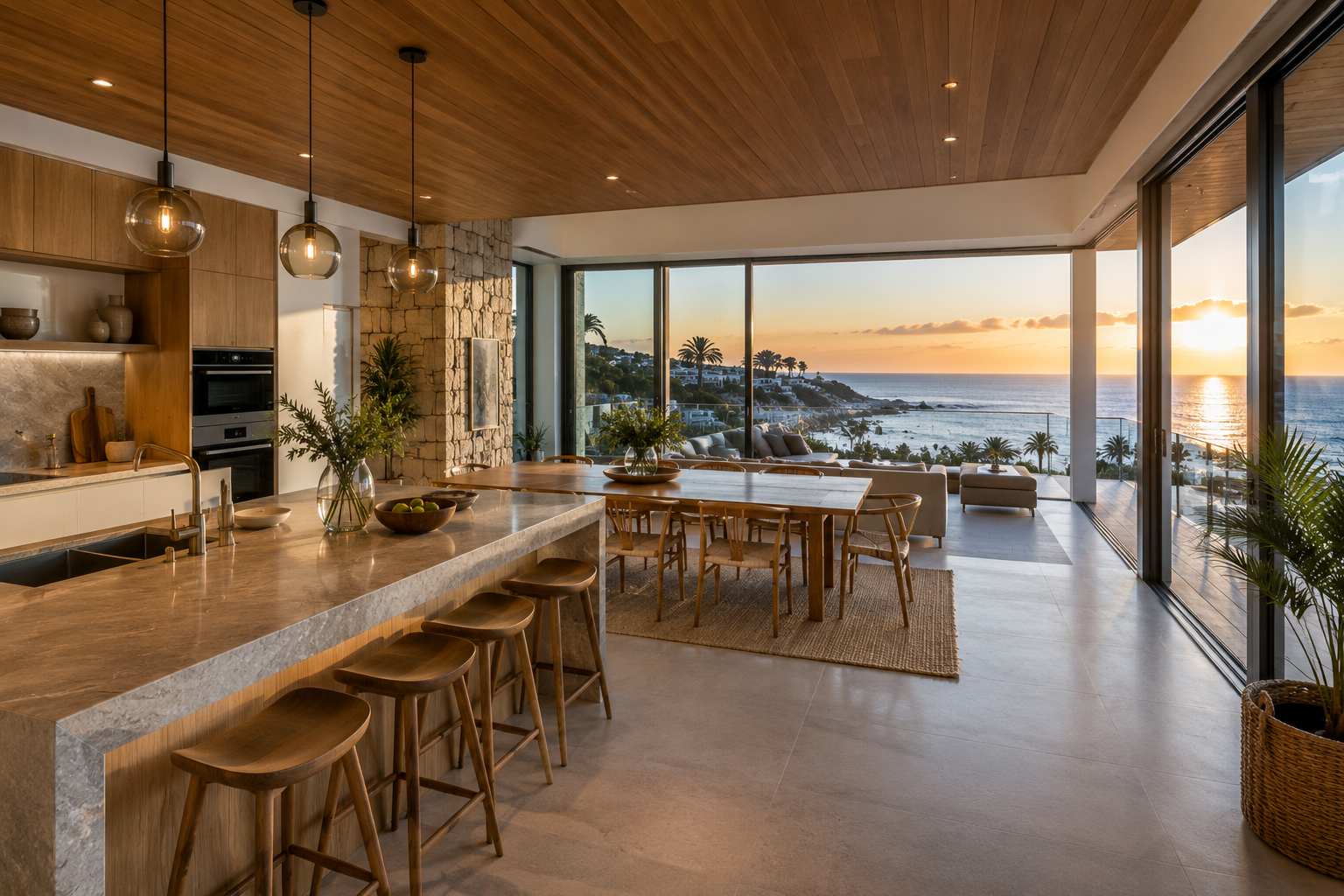
Cape architects have learned to design for this. The best contemporary houses use deep overhangs to filter the high midday sun, large west-facing apertures to capture the evening, and small east-facing openings that let the morning in without flooding the rooms. The light, in other words, is treated as a material to be metered rather than admitted.
Stone is the structural answer
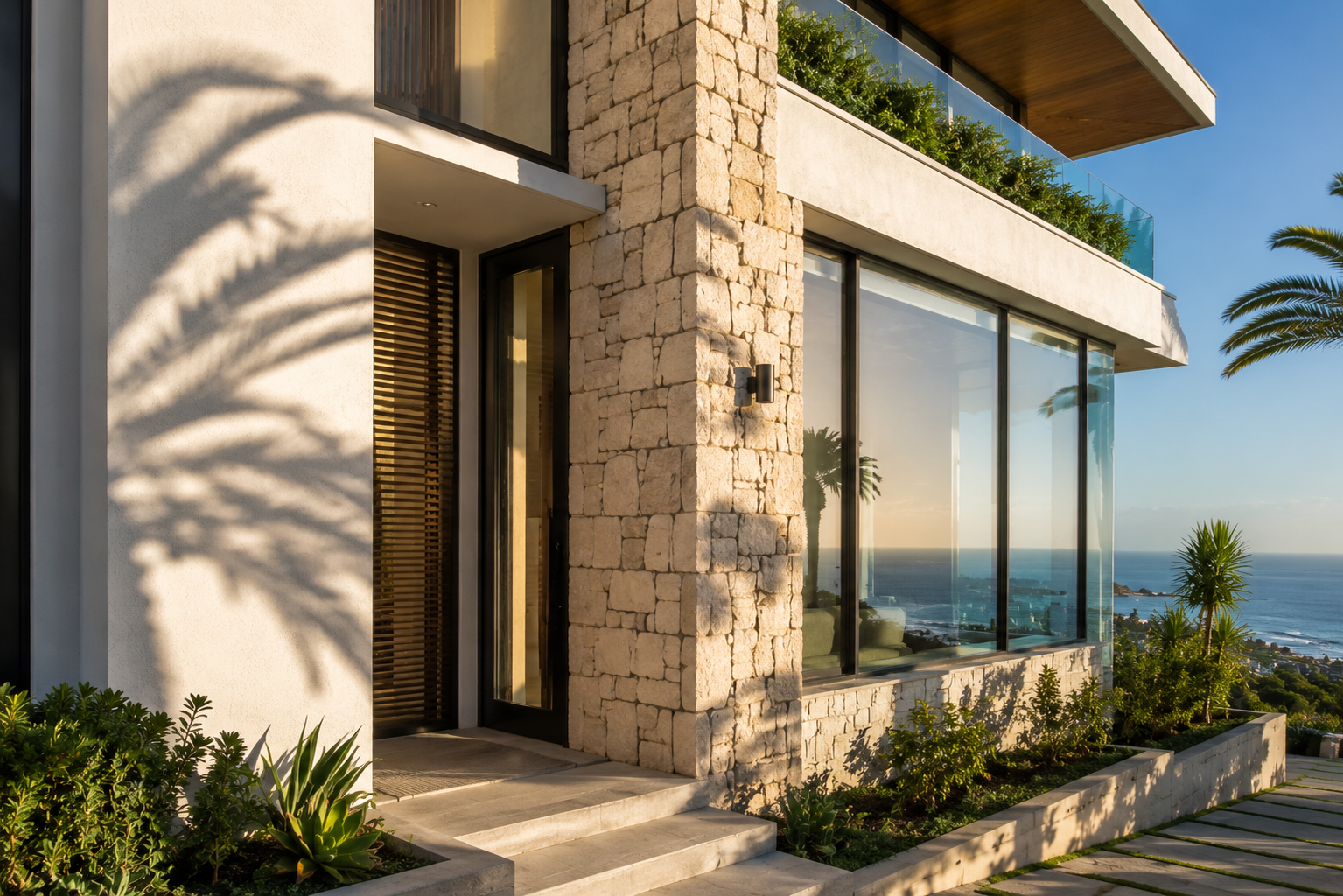
The second consistent thread is stone. The granite and sandstone that form the spine of the peninsula appear in almost every serious villa from the 1990s onwards — as foundation walls, as cladding, as garden retaining structures. Part of this is practical: local stone weathers well in the salt air, and the labour to lay it is still reasonably available. Part of it is visual: the silvery granite of the Twelve Apostles reads beautifully against the white plaster that almost every Cape house wears as its outer skin.
The best new villas use stone honestly — large unfinished blocks at the lower courses, smaller dressed blocks higher up, and a careful distinction between structural stone and decorative cladding. The houses that age badly are the ones that pretend to be stone without committing.
The sea is the third elevation
What separates Cape coastal villas from their counterparts in, say, Mediterranean France, is that the sea is always treated as a fourth elevation rather than a view. The best houses do not simply face the water; they build a continuous architectural conversation with it. Pool decks step down towards the surf. Living rooms open onto terraces that frame a single horizontal slot of Atlantic. Bedroom windows are sized to the wave heights of the bay below.
The architects who do this well — Gawie Fagan in the older generation, SAOTA and Stefan Antoni in the current one — talk about "designing towards the water" rather than "designing for a view." It sounds like a small distinction. It is in fact the whole game.
What the next decade is doing to all this
The most interesting Cape villas of the last five years have started to push back against the all-glass coastal cliche. Smaller windows, deeper porches, more shade, and a return to thicker walls — partly a response to climate, partly an aesthetic recalibration. The 2010s Cape villa was an aquarium. The 2026 Cape villa is closer to a quiet pavilion.
Light, stone, and sea remain the three obsessions. The proportions, finally, are shifting.