One of the quieter privileges of staying in a Cape Town villa is that a UNESCO World Heritage site sits on the slope above your kitchen window. Table Mountain National Park is so visually familiar — the flat-topped silhouette, the cable car, the city draped beneath — that it is easy to forget what it actually is. Beneath the postcard view sits one of the smallest, oldest, and most biodiverse floral kingdoms on the planet.
This is a short guide to walking through it slowly, with a particular eye for the plants the photographs never quite capture.
What "floral kingdom" actually means
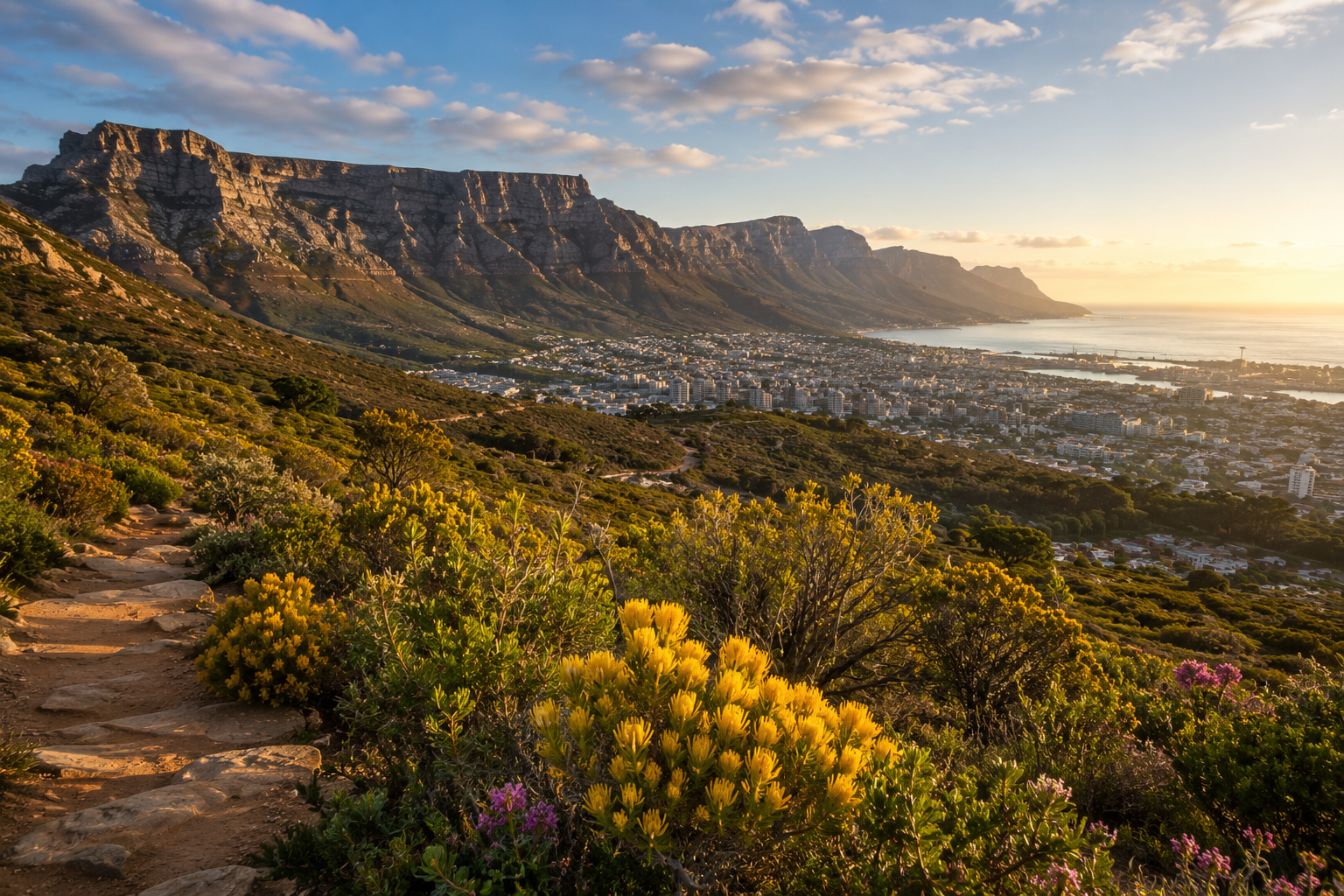
The world is divided into six floral kingdoms — large biogeographic regions defined by the plants that evolved within them. Five of those kingdoms span entire continents. The sixth — the Cape Floral Region — is, by an enormous margin, the smallest. It covers roughly the southwestern tip of South Africa, and it contains around 9,000 plant species, almost 70 percent of which grow nowhere else on earth.
In practical terms, this means that when you walk a contour path on Table Mountain in spring, you are walking through a botanical density that has no parallel on the planet. The fynbos under your boots is doing things that even the well-travelled hiker rarely sees twice.
Where to start: the Pipe Track and Kasteelspoort
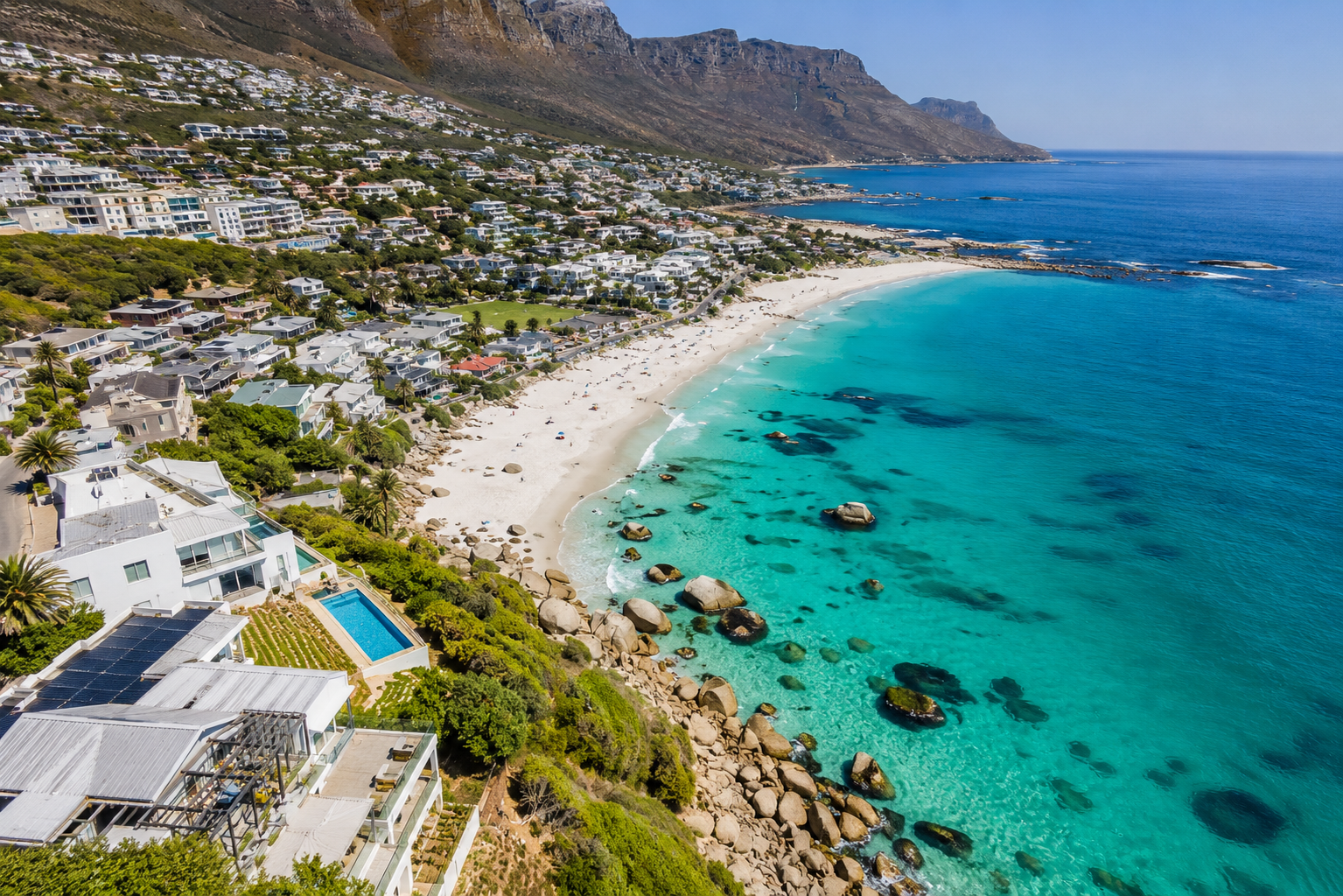
The easiest introduction is the Pipe Track, a near-level contour path running above Camps Bay along the Atlantic side of the mountain. It rewards a slow pace: silver trees on the lower slope, restio grasses bending in the wind, and proteas in flower from late autumn through winter. From the Pipe Track you can branch up Kasteelspoort, a steeper but well-marked path that delivers you onto the back table — a rolling, almost otherworldly plateau dotted with reservoirs and indigenous gardens.
Allow three to four hours up Kasteelspoort, longer if you intend to actually look at things. Cape mountaineers do this route at speed; that is not the point.
The Constantia and Cecilia routes
The eastern, leafier side of the park is reached from the Constantia and Cecilia trailheads, and it is the part most likely to surprise first-time walkers. The forests here are part planted, part indigenous, and the air is several degrees cooler than the city below. Cecilia Ravine and Skeleton Gorge both deliver you onto Table Mountain's back via deep, mossy stream beds — a completely different mountain to the Atlantic side, in the same park.
The big advantage of this side: the routes are sheltered. On a windy Cape day, Cecilia and Skeleton Gorge are walkable when the cableway is shut.
When to go, and how to think about it
Late winter through spring — roughly August to October — is the dramatic fynbos season, when the slopes flush with bright orange and yellow. But the park is a year-round walk; summer rewards early mornings, autumn rewards golden afternoons, and winter offers the cleanest air you will ever breathe at this altitude. The mountain is technically free to walk, although the cableway and a small number of paths charge an entry fee.
Most villa stays place you within a ten-minute drive of a trailhead. The temptation, after a long flight, is to do the cableway first. Resist it. Walk up one path, even just for an hour. The mountain becomes a different object once you have touched it on foot.