The bottom half of the Cape Peninsula is the part most first-time visitors do not get to, which is a quiet shame because it is also the part that works best with children. The drive from Cape Town's centre takes about forty minutes; the change in pace, in temperature, and in expectations is closer to a different country. If you have travelled with small humans, you will know how much that matters.
Here is a working guide to the family-friendly stretch from Boulders Beach southwards, and what to look for in a stay.
Boulders Beach: penguins, tidal pools, and a sheltered cove
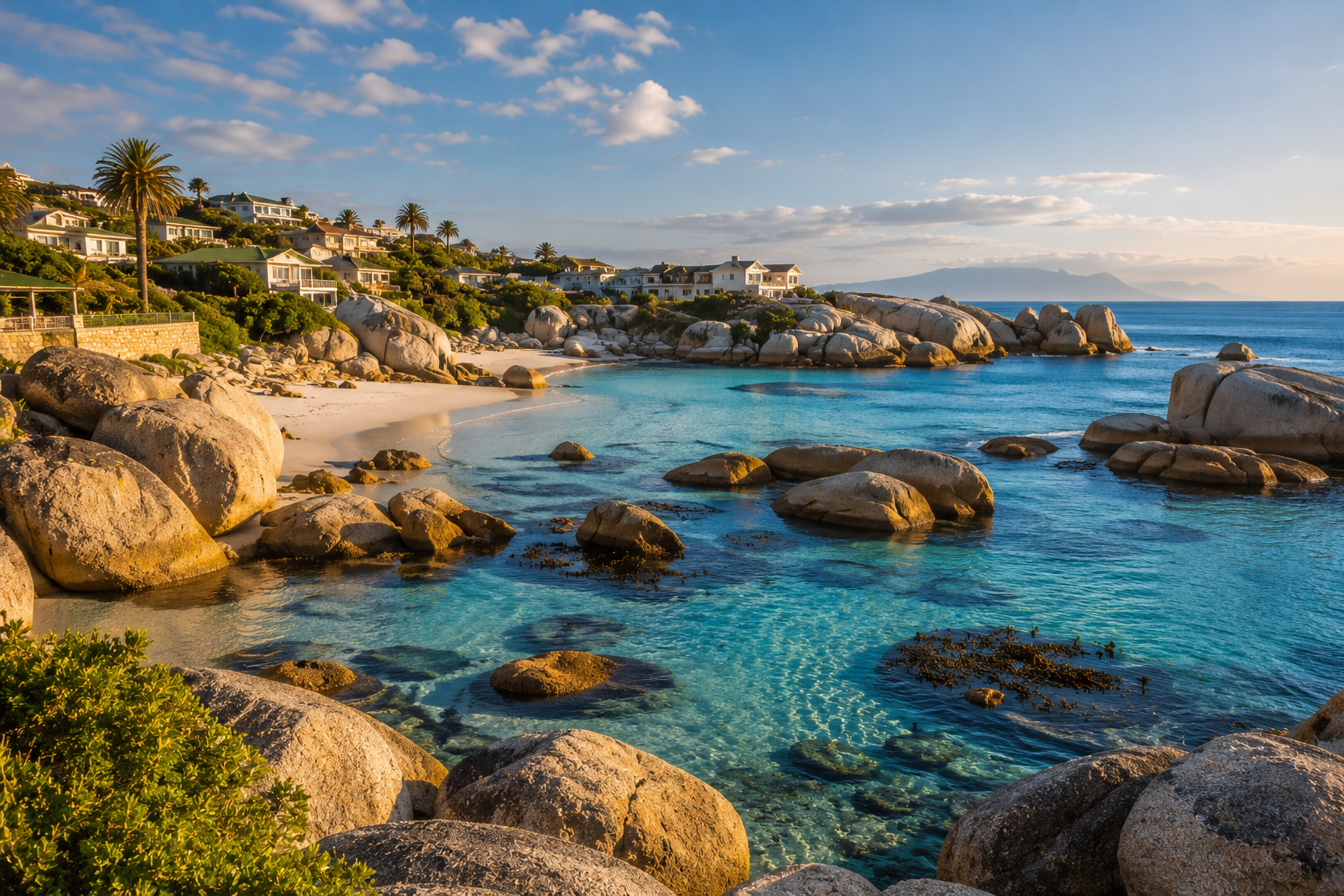
Boulders is the headline attraction for families, and rightly so. A colony of African penguins has been quietly nesting on the granite boulders at Simon's Town for over forty years, and the boardwalk lets you stand within a few metres of them without disturbing the colony. Beyond the boardwalk there is a small protected beach inside the boulders themselves, where the water is sheltered, warm-ish by Cape standards, and almost windless. For families with young children, this is the rare Atlantic-side beach where everyone gets to swim.
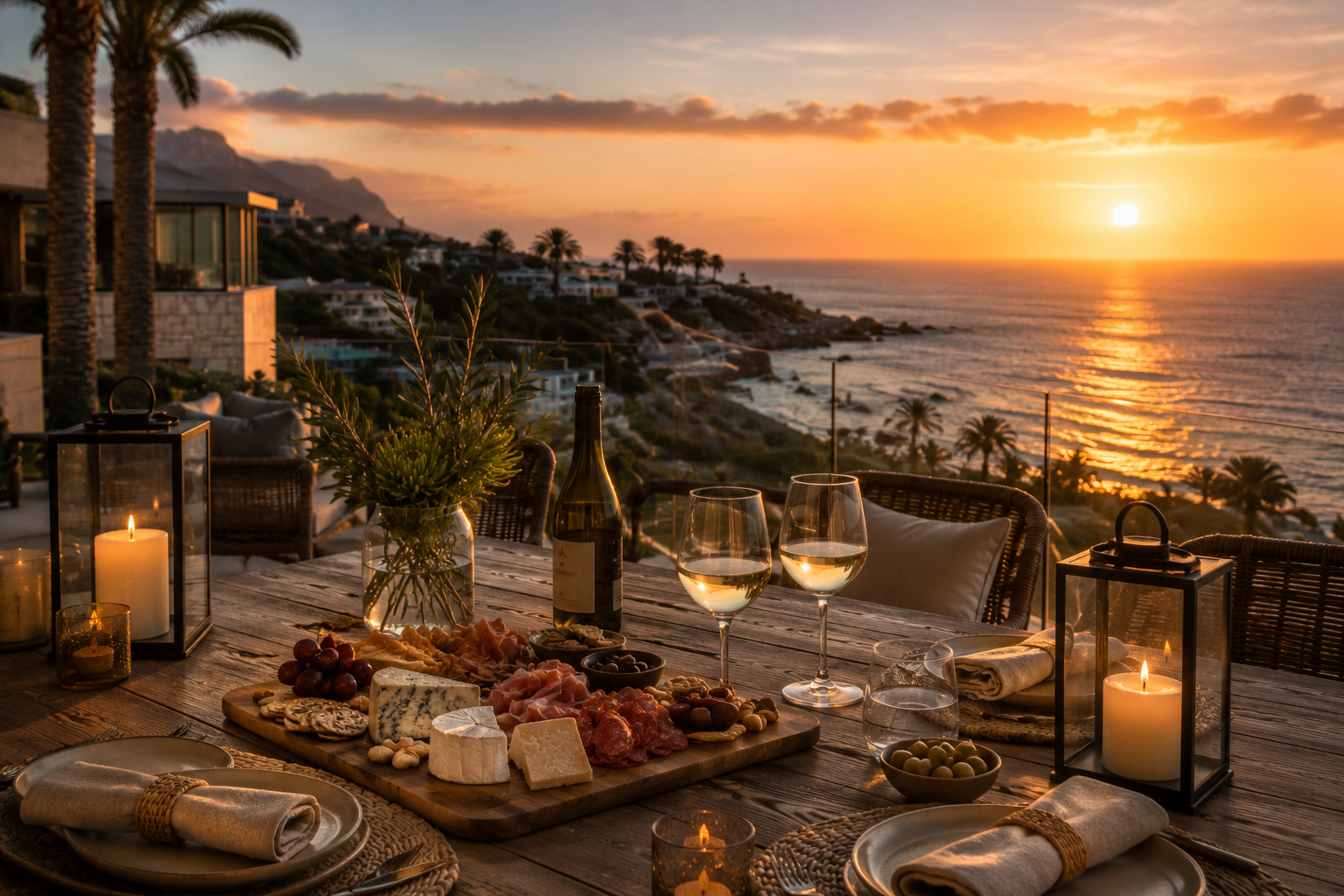
Most of the boutique villas in this area sit on the slopes between Simon's Town and Murdoch Valley — three- and four-bedroom houses with proper gardens, often with the kind of decks that suit a long Sunday lunch.
Fish Hoek and Kalk Bay: tidal pools and a working harbour
Move north a little and you reach Fish Hoek, with one of the longest, calmest, sandiest family beaches in the whole peninsula. The tidal pool here is a proper local institution: chlorinated by the sea, refreshed by every tide, and used by three generations on any given Saturday. A short walk further is Kalk Bay, the small working fishing harbour where boats unload snoek in the morning and the whole village turns up to watch. The harbour cafe is unfussy and excellent.
Villas around Fish Hoek and Glencairn tend to be more relaxed than their Atlantic Seaboard counterparts — less sleek, more lived-in, often with a granny flat for grandparents.
St James and Muizenberg: the warm-water side
The eastern, False Bay side of the peninsula has a small but important advantage: warmer water. By the time you reach St James and Muizenberg, the Atlantic chill has given way to a more swimmable Indian Ocean current. Muizenberg's beach, with its row of brightly painted Victorian bathing huts, is the best beginner-surfing beach in the Cape, and the schools here are used to dealing with first-time eight-year-olds.
For a family week, basing yourself anywhere from St James to Muizenberg gives you a calm tidal pool, a learn-to-surf bay, and a quiet promenade walk before breakfast.
What to look for in a family stay
The practical advice is unglamorous: enclosed gardens, a fenced pool, and a working washing machine matter more than thread counts. Look for villas with at least two bathrooms, an open-plan kitchen-living area for evenings indoors, and a sensible distance to a beach you can walk to. Bonus points for a proper braai, an outdoor shower, and a host who lives nearby in case the wifi misbehaves.
Cape Town tends to be marketed as a romantic city for couples. The bottom half of the peninsula is its quiet rebuttal — a stretch of coast that knows exactly how to handle a family holiday.